
Published on December, 17 2025
Street Sweepers play a significant role in keeping streets, water, and air clean. For contractors sweepers can be used in a variety of settings, so it’s important to find the machine that works best for your application. Taking into consideration job type, machine type, and durability can help set you up for sweeping success.
Application
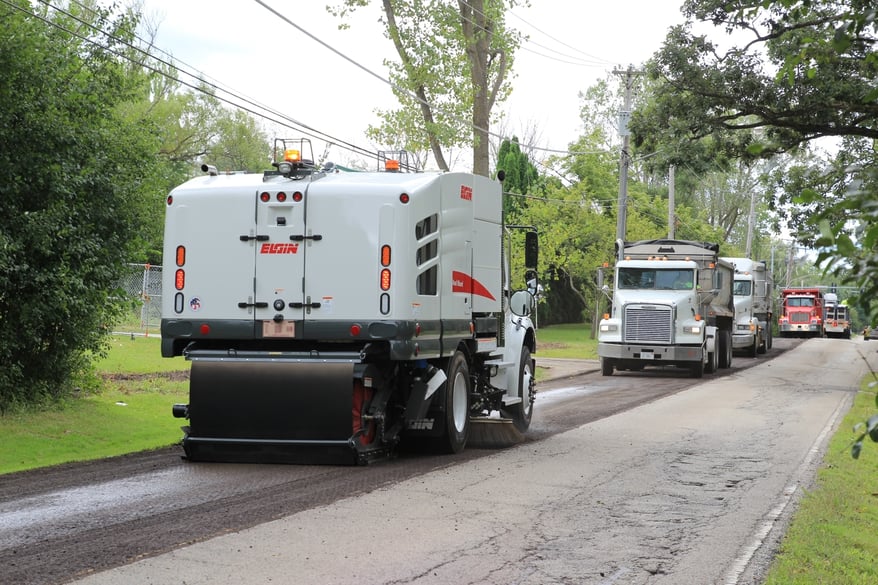
When determining what kind of machine you need as a contractor, it’s important to consider what sweeping application you will be working in most often. If your primary business is parking lots, both air and mechanical machines can do the job well, and size is a larger factor. Construction sweeping is important as there are regulations and permits regarding air/water quality, and it’s important to keep the area leading into the construction zone clean. Air machines (regenerative and vacuum) work best for picking up fine particles, and mechanical machines can pick up larger items. If the majority of your work is millings, a mechanical machine offers the durability for the job. For municipal contracts nearly any machine type can work. Take into consideration the general state of the streets (flat vs crowned) and climate/region.
Machine Qualities
Machine accessibility is another thing to consider. Machine size is an important factor. If you’re doing parking lot work, a smaller machine can be helpful to navigate smaller spaces and offers you maneuverability. If you’re working construction sites, a larger machine with a larger hopper capacity is a good choice, as you can sweep more before needing to dump. If you are working on a job with a place to dump on site, hopper size might not matter as much.
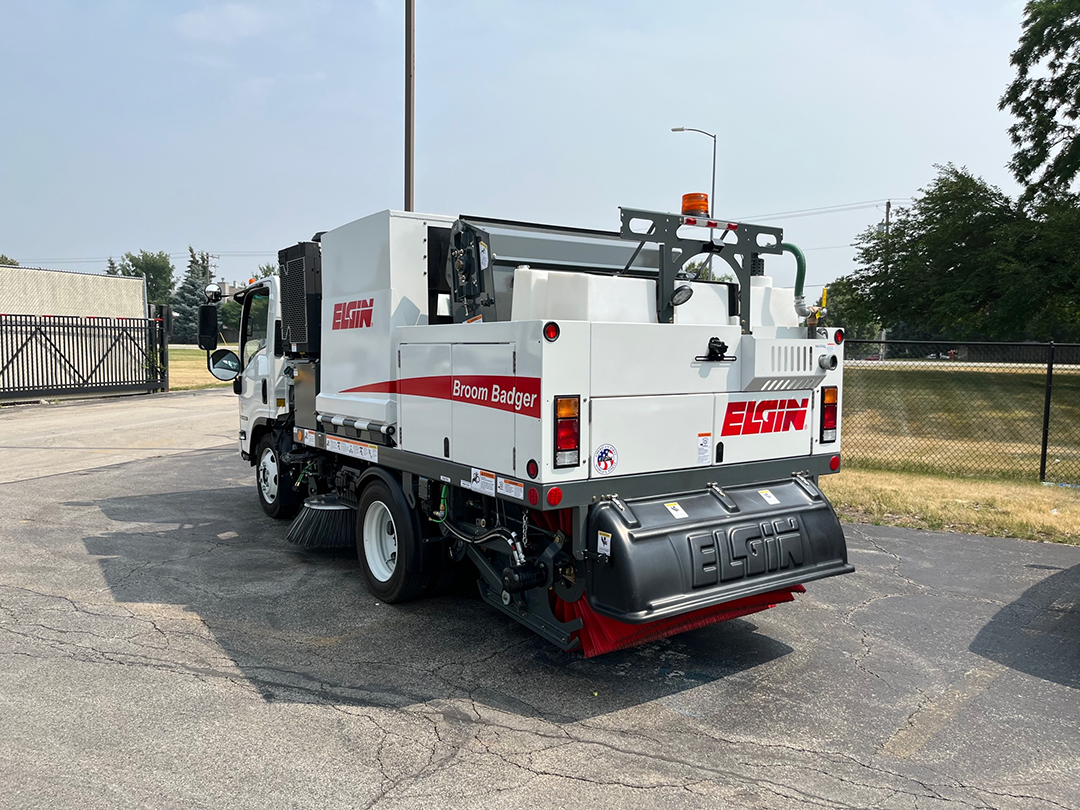
It’s also important to consider whether or not your machine requires a commercial driver’s license (CDL) to operate. There is a larger pool of drivers with Non-CDL machines, since there are less requirements. Elgin Sweeper offers a variety of Non-CDL sweepers, including the Broom Badger®. Whether or not a Non-CDL machine is right for you, depends on your application as well, as Non-CDL sweepers are typically smaller.
You should also factor in your need for speed. While all sweepers sweep at a relatively slow speed, different machines can transport at different speeds. Machines like the Elgin Broom Bear® can transport at highway speeds. This is especially helpful if you have jobs that are a far distance from one another, or require highway driving to get to. Travel speed is less of a consideration if your machine only needs to sweep a specific area and doesn’t have to travel from job to job. Some machines, like the Elgin Pelican®, can be put on a trailer for transport, which also changes how quickly a machine can be transported to the job site. This is a great solution if a smaller or slower machine is right for your application, but you have to travel a large distance to the job site.
Another important consideration is water usage. Does the machine use water for dust control? For certain applications a specialty waterless or industrial machine may be the best fit. This is the case for cement plants and other industries where the materials being swept should not be mixed with water. It can also be helpful when sweeping in colder climates where water may freeze quickly.
There are pros and cons to every machine type, it’s just a matter of finding the machine that best matches your needs.
Durability
Once you’ve found the street sweeper that works best for you, it’s important to consider factors that contribute to the longevity of the machine. You want your sweeper to last, especially if it’s doing tough jobs like millings. This means the durability of your sweeper matters. Durability impacts a machine’s longevity and its potential resale value. There are many ways to set your sweeper up for success when it comes to longevity. Regular maintenance keeps the machine running smoothly. Machines designed with ease of maintenance in mind, make those upkeep tasks more efficient. There are also lots of options that can help increase your sweeper’s durability. Elgin offers the LifeLiner® hopper system, a liner that minimizes rust and damage. There are also different materials for brooms and dirt shoes, finding the right one for your application helps your sweeper tackle the job.
From mechanical, to vacuum, to regenerative air, there are a variety of sweeper types to help you get the job done and keep your job site clean. Knowing the type of work and environments you’re sweeping, the pros and cons of various sweeper features, and finding a machine with options to endure the toughest jobs, can help you select the right street sweeper for your work.